Physical Address
304 North Cardinal St.
Dorchester Center, MA 02124
Physical Address
304 North Cardinal St.
Dorchester Center, MA 02124

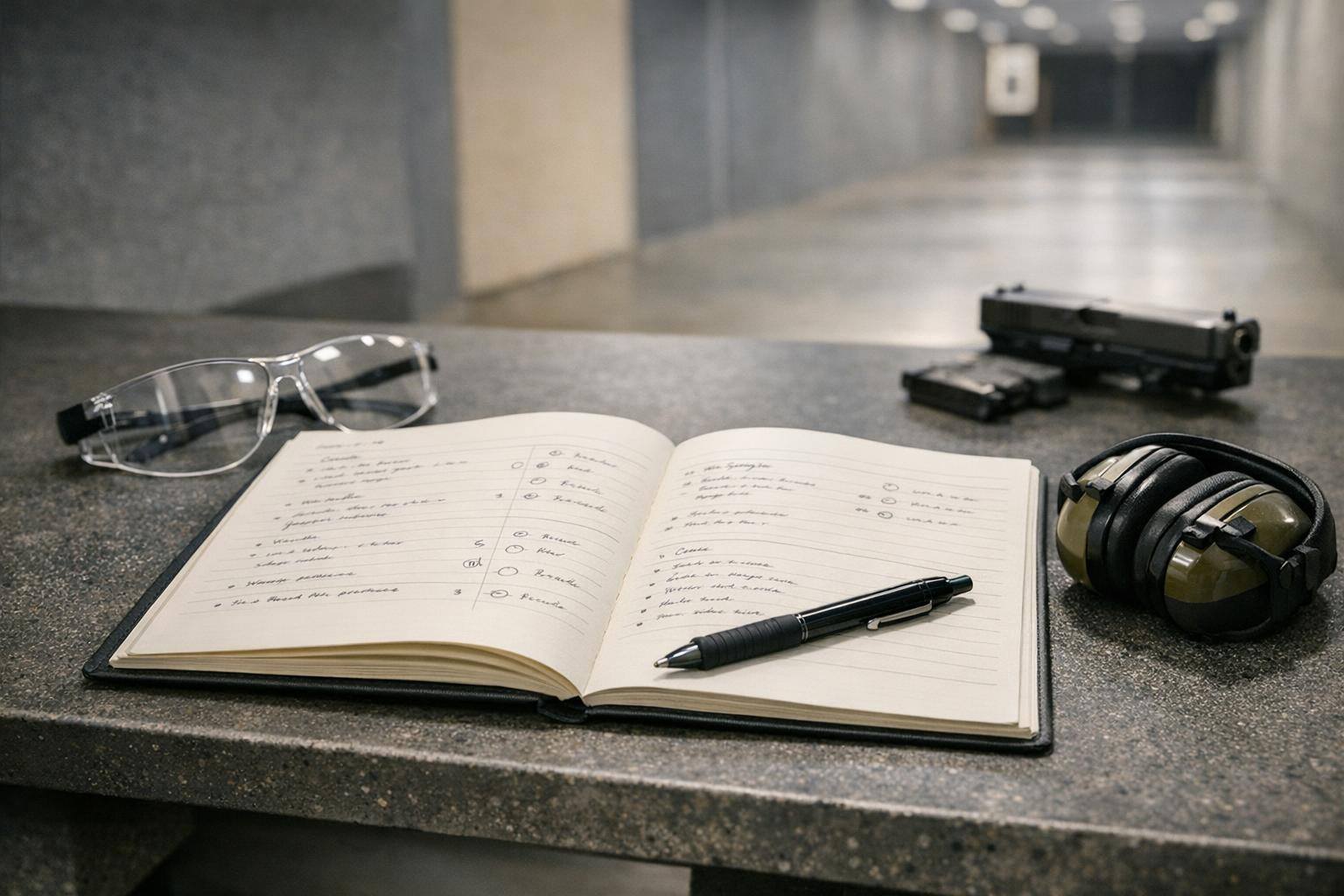
First, note that good coaching gives the shooter more information than they can use. This means that comments on your grip, breathing, sight movement, follow-through etc. have to be refined for you to use in your next practice session. Writing down your coach's comments in a small notebook as you go will help you to clarify and organize them in such a way that your next session and subsequent coach's comments will benefit from your having done so.
Start to make a notebook by first writing down the coaches comments as if you had written them down when he made them. The comments "The muzzle moves as I rush the trigger" are more useful than "Your trigger control is awful". The first statement describes something that can be observed and even checked for, the second a moment of difficulty turned into a general judgment about someone.
Label these as questions. Note the occasions when they occur and the conditions in which they occur. Try to make sense of them but be careful to note when you have made an interpretation as opposed to a simple observation. Write these down as separate lines.
A simple entry can use three prompts:
– Observation: What did the coach see or hear?
– Question: When, and under what conditions, does it appear?
– Next check: What small change will be observed during the next session?
This helps to keep the notebook in focus. If a note can't be seen, heard, counted or described during practice, then it needs to be rewritten. The note must be clear enough for the shooter to report back to the coach on what happened during practice.
The feedback from coaching is often given in clusters and can cover many different aspects of shooting (stance, hand position, visual focus, trigger movement, timing and follow-through of body parts). In practice these can all get mixed up and end up in a noisy practice session. So choose one main point to concentrate on, and one minor check point. Write the main point to concentrate on as an action that you can practice.
Identify one primary item to focus on in your practice (the most likely thing to impact what you are trying to fix and the easiest thing for you to pay attention to) and one check (safely locking in one of the other variables that you are trying to keep consistent in practice, such as safely keeping all components of your shooting process locked into place for trigger control).
Prioritizing written action step instead of label. For example, "Keep process of getting to trigger press steady" is a better written action step than "Improve trigger control". This helps the shooter remember what to do when the shoot is busy, dealing with range procedures, shot target, etc. and equipment.
End that drill when attention to the process selected to shoot can no longer be maintained even to complete the set. Shooting when fatigued makes a small technical problem look bigger than it is. Just because you can shoot more does not mean that shooting more better fulfills the purpose of that drill.
This is how a practical notebook reads: Does a slower preparation routine also decrease the shooter's rush to get off and start shooting? Does a shorter version of a practice block still measure up to the previously agreed upon process? Does a certain setup still have the same shooting results after a short break?
Keep your blocks narrow. A drill, focus for the session and things to look for that session, and decisions from that session for the next session of similar practice all go on the one page for that practice session. As above, try to keep as many variables constant as possible for most of your practice.
A useful page might include:
– Date of session, general notes regarding shooting conditions.
– The session's single priority.
– The drill or target used.
– A short note on what was seen, felt, or heard.
– One decision for the next block.
Description can be as simple as "started to rush near the end of the drill" or "setup felt to have been inconsistent after interruption" and this type of information is valuable. Unfortunately we are not always able to obtain clear results from our attempts at practice, and this too should be recorded in the notebook.
Separate Safety checks from Practice notes. Write a short pre-session list to remind yourself of range rules, the condition of your firearm, eye and hearing protection required, and when you can load, handle ammunition, etc. as well as when cease-fire commands are given. Refer to a current and qualified Range Officer for interpretation of any rule as needed.
Safety items should stand alone on your practice page. This means that you should have a short pre-session check list that outlines the range's current procedures for safety items, the condition of your firearms, the direction of use for them, and so on. This then becomes a short pre-session checklist that you go through before you go to the range.
Note distractions, unclear commands, uncomfortable clothing, and doubts about procedures that you discovered to solve problems for future shoots. As requirements and range procedures can vary significantly, note current official sources as well as the facilities rules that apply for your shoot and refer to them in the coaches meeting instead of to old notebook entries.
Reflecting on what has worked for you and others after your session will help you create a list of ideas to discuss with your coach. Give yourself 5 minutes or so to write down one thing that seems to have worked, one thing you are still wondering about, and one thing you will change for your next session.
After you have written up several range sessions, look for patterns. i.e. how do things change after a long period of shooting? After a rest? Do shots that look good after a break look as good after a while? Is a correction you make to a problem with your shot (for example) sufficient for a while and then seems to wear off?
Take the notebook to the coaching session. Use it to prompt discussion of your past shots. Don't get defensive if your interpretation of the data is totally wrong. Remember that a written pattern is a prompt for investigation not proof of cause. Good feedback could mean to continue with what you're currently doing, to simplify what you're doing or to go back to a basic setup.
A good practice notebook is small enough to be carried to the range and records the decisions made, safety procedures and any uncertainty. From this it can be easily turned into focused shooting range training from the comments of a coach, even if they are scattered.